SUV or Sedan? How to Pick the Right Rental Car
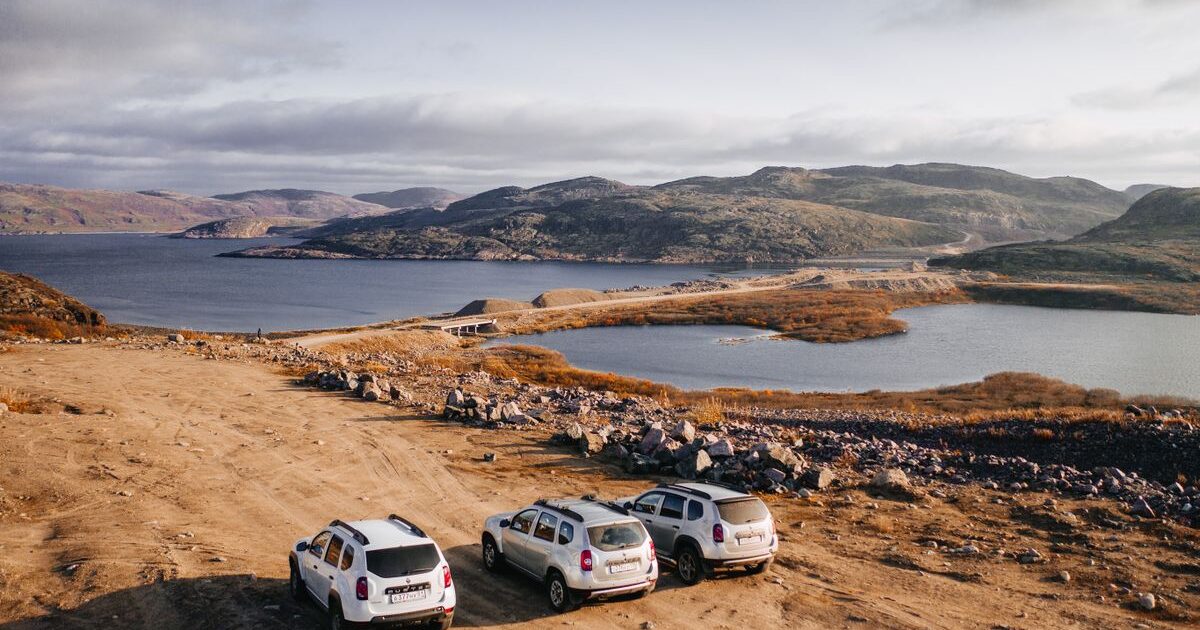
Open the list of nine car models in the fleet and you’re suddenly picking under pressure — the easy way out is to default to instinct: “I’ll take an SUV, it feels safer” or “I’ll take the cheapest one, we won’t spend much time in it anyway.” Both instincts can backfire. A Family SUV for a two-day city break in Bucharest means higher fuel costs and a car that’s a hassle to park on the narrow streets around the Old Town, for a trip that never needed the extra size. An Economy car booked for four adults with a week’s worth of luggage heading to the mountains means a packed trunk, cramped knees, and a small engine straining on the first real climb out of the Prahova Valley.
The difference between a rental that works and one that frustrates you for the whole trip isn’t the badge on the hood — it’s how well the car actually matches your route. Below is the same decision framework we walk clients through on the phone when they’re torn between two classes, followed by a class-by-class rundown of the fleet so you know in advance, not after you’ve already left the city, whether you need a sedan, an SUV, or something else entirely.
Four questions to answer before you open the car list
The first question, simplest yet most often skipped, is how many people will actually be in the car on each day of the trip — not just on pickup day. A couple heading to the coast in summer has different needs than four colleagues driving to a weekend workshop in Sinaia, and a family with two small children and car seats takes up a very different amount of space than four adults with no luggage. Seat count on paper matters less than the real space left once everyone and everything they’re carrying is inside.
The second question is luggage volume, not the number of bags. Two carry-on-sized bags fit an Economy trunk without a fuss; two 23kg suitcases plus a ski bag and a camera backpack won’t, no matter how you rearrange them. If you’re travelling with bulky gear — skis, bikes, a double stroller, trade-show materials — that weighs more on the decision than passenger count does.
The third question is road type. A weekend spent entirely in Bucharest, with underground parking and city-centre traffic, favours a compact, easy-to-manoeuvre car. A trip into the mountains, with switchbacks, side roads to mountain cabins, or unpaved stretches around Bran and Moeciu, calls for the higher ground clearance of an SUV. Don’t confuse the airport-to-hotel leg with the whole trip — plenty of renters choose a car based on the first 20 kilometres and regret it once they hit Predeal.
The fourth question is budget, weighed against what you actually value in comfort. The online booking form shows the daily price for each option instantly — with a security deposit or without one — and the gap between classes is easy to see in real numbers. It’s worth asking honestly whether you’re paying for a Premium SUV because you need that comfort, or because of the impression it makes at a client meeting — both are valid reasons, but the budget should match the real one.
- Count passengers for every day of the trip, not just on pickup day
- Estimate luggage by volume, not by number of bags
- Check whether the route leaves the city for mountain or unpaved roads
- Compare the deposit and no-deposit price before settling on a class
- Pick the gearbox you’re confident with, not one you plan to practise on
Class by class: which fleet car suits which trip
The Dacia Logan and Dacia Sandero, the two Economy models, remain the right call for city driving, short hops between Bucharest and nearby towns, or a solo traveller or couple who wants the lowest daily rate in the fleet. They’re easy to park on streets like those around Cotroceni or Dorobanți, sip fuel in urban traffic, and handle a run to Ploiești or Târgoviște without complaint. What they’re not built for is four adults with big luggage or long motorway stretches with hours behind the wheel.
The Skoda Fabia, the sole Compact model, is the middle ground for anyone who wants more room and comfort than an Economy without stepping up to business-sedan pricing. It suits a couple with one large bag each, a weekend out of town, or anyone who doesn’t want to compromise on suspension comfort over a less-maintained county road.
The Toyota Corolla Hybrid, the only automatic-hybrid in the fleet, is our firm recommendation for long drives where fuel economy matters — a Bucharest–Sibiu or Bucharest–Constanța round trip in a single day, for instance. The automatic gearbox removes the worry of shifting in heavy traffic, and the hybrid system noticeably cuts consumption over a conventional engine on runs past 300-400 km. It’s also the natural pick for anyone who has only ever driven automatic.
The Skoda Octavia, in the Business Sedan class, is built for work trips — meetings with partners, a drive out to a client in another city, or simply wanting to arrive relaxed, with a quiet cabin and a generous trunk for presentation materials or a week’s luggage. It’s not a car that draws attention, but it earns it through comfort.
The Dacia Duster, the Compact SUV in the fleet, is the recommendation for a mixed route — part city driving, part county road, maybe a short forest track up to a mountain guesthouse. The extra ground clearance makes a real difference on gravel or packed snow, and the price stays close to the Compact class.
The Nissan Qashqai, in the Family SUV class, is the pick for a family with two or three kids, car seats, and a week’s worth of holiday luggage. The generous boot and the raised driving position, which gives better visibility in traffic, make it suited both to long holiday drives and to the daily school run if the rental covers a longer stretch of time.
The Dacia Jogger, the fleet’s only 7-seater, solves exactly the group-travel problem — an extended family, a group of friends heading to the mountains together, or a small team travelling between cities for an event. It’s the only option in the fleet once passenger count goes above five and luggage still needs to fit.
The Skoda Superb, at the top of the Premium Business class, is the choice for important client meetings, events where image matters, or simply for someone who wants the fleet’s maximum comfort for a special occasion — an anniversary, a luxury city break, or a protocol visit. It’s the roomiest car in the fleet inside and the quietest at motorway speed.
Manual or automatic? What to know if you’re not used to shifting gears
Most cars in the fleet are manual, which is standard for the Romanian and wider European market, where stick shift remains the default even in mid-range cars. For a driver used to manual, that’s a non-issue. For a visitor coming from a market where automatic is the norm — the US, much of Asia — it’s a different story, especially if the last time you touched a manual gearbox was during a driving test years ago.
If you haven’t driven manual recently, or you’d simply rather remove one more variable from an unfamiliar city, the Toyota Corolla Hybrid is the only automatic in the fleet and a safe choice for any route, from the Otopeni-to-city-centre transfer to a few hundred kilometres toward the coast or the mountains. The transmission filter is visible directly on the fleet page, so you can rule out the wrong options before you even reach the booking form.
One practical note for anyone sticking with manual: Bucharest traffic, especially on Kiseleff, in Victoriei Square, or along Calea Floreasca during rush hour, means frequent gear changes. If that’s not something you’re comfortable with, the small daily surcharge for the automatic pays for itself in avoided stress within the first hour of driving in an unfamiliar city.
Driving to the mountains or in winter conditions: what actually matters
The classic Bucharest–Brașov route, on DN1 through Ploiești, Sinaia, Bușteni and Predeal, or on the A3 motorway combined with DN1 for the mountain stretch, climbs over 900 metres of altitude in under 120 kilometres. The switchbacks near Posada, the curves through the Bușteni–Predeal stretch, and the heavy Friday-evening and Sunday-afternoon traffic are realities every driver needs to plan for, regardless of which car they’re in.
For these routes, especially between November and March, a Compact SUV or Family SUV — the Dacia Duster or Nissan Qashqai — offers a real advantage: higher ground clearance, better grip on packed snow, and a driving position that helps with visibility in the fog that’s common around Comarnic-Bușteni early in the morning. A sedan or an Economy car isn’t unsuitable if the roads are cleared, but it becomes a real handicap in heavy snowfall or on untreated side roads, like many of those leading to guesthouses around Poiana Brașov or Bran.
Every car in the fleet carries mandatory third-party liability insurance regardless of season or destination, so basic coverage isn’t an extra worry on a mountain drive. What stays your responsibility is adjusting speed to conditions and, if heavy snow is forecast, choosing a higher-clearance class at booking time — not improvising it last-minute at the Otopeni or Băneasa pickup point.
Not too much, not too little: the sizing mistake we see most often
The most common “too much” mistake is booking a Premium or Family SUV for a solo trip or a couple with no bulky luggage, usually out of caution or a desire for maximum comfort “just in case.” The result is a higher daily rate, higher fuel consumption, and, in Bucharest, a car that’s genuinely harder to park in the central area or in older neighbourhoods with narrow parking spots.
The reverse mistake, “too little,” shows up when four or five people with a week’s luggage choose an Economy car purely for the lower daily rate shown. Over a week, the price gap between an Economy and a Compact SUV is often smaller than the excess baggage fee you’d pay at the airport, yet the discomfort in the car lasts every single day of the holiday — a badly calculated saving, paid for with knees against the dashboard.
Our practical advice: size the car for the most crowded scenario of the trip, not the lightest one. If most days it’s just the two of you but one day a third colleague joins with luggage, book for three. And because the price differs between the deposit and no-deposit options, it’s worth calculating both for your chosen class before deciding — the daily gap there can move the final decision more than the gap between two neighbouring classes.
If you’re still torn between a sedan and an SUV, the simplest next step is to open the full fleet list, compare classes side by side with the exact daily price for your route, then fill in the online booking form — you’ll see the price instantly in both variants, with or without a deposit, and get a confirmation call shortly after you submit it. And if you want concrete route ideas for whichever car you choose, take a look at these unmissable drives around Bucharest — they might even shift your choice of class.
Notă: informațiile din acest articol au caracter general și pot fi actualizate în funcție de modificările legislative. Ele nu constituie consultanță juridică individualizată. Pentru situația ta concretă, cere o ofertă sau sună la 000.000.000.